Summary
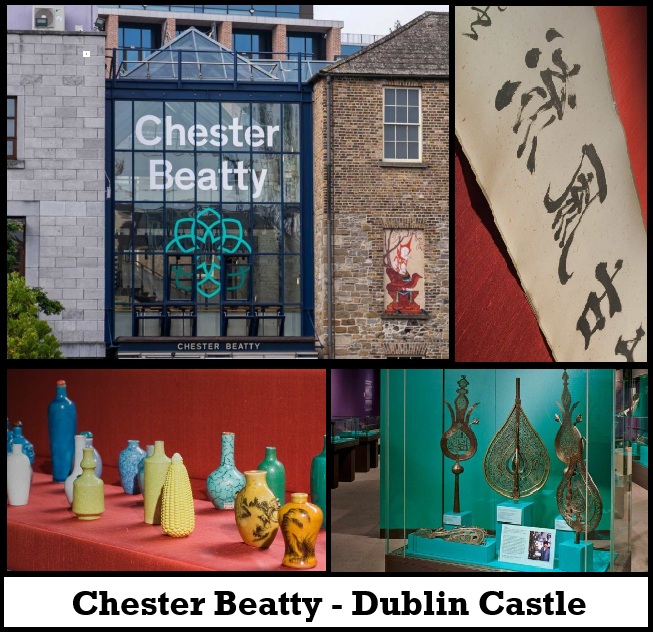
The Chester Beatty, Dublin Castle houses one of the most significant collections of historical artefacts and manuscripts from all over the world.
A Museum of world cultures. Described by Lonely Planet as ‘not just the best museum in Ireland but one of the best in Europe’.
The Chester Beatty is home to one of the most significant collections of historical artefacts and manuscripts from all over the world.
Setup by Sir Alfred Chester Beatty (1875-1968), who was one of the greatest collectors of the twentieth century, and an extraordinary friend to Ireland.
Chester Beatty was born in New York into a middle-class family, the youngest of three sons. His father’s parents were Irish, while his mother was from a long line of pioneers the earliest of whom had arrived in America in 1650.
As a young mining engineer in New York, Beatty was already collecting European and Persian manuscripts as well as Chinese snuff bottles and Japanese netsuke. Chester Beatty travelled all over the world with his businesses and it was during this prosperous period that he built the greater part of his collection.
After a long and successful career as an American mining magnate and philanthropist, he relocated to Ireland and brought his collection here, originally located in Shrewsbury Road in a purpose-built library and gallery. In 2000 the museum moved to Dublin Castle to a more accessible, secure premises and to accommodate increasing visitor numbers.
Chester Beatty was the first Irish citizen to be awarded a state funeral in Ireland. At his funeral service in St Patrick’s Cathedral, the Archbishop described him as a ‘Prince among benefactors, a philanthropist, patron of the arts, and industrialist who became a world figure, and a lover of Ireland’.
The Chester Beatty is also a research library for scholars from all over the world.
For more information on the museum, opening information etc click here.